
Christmas in the Desert
Published:
There are not many national parks that are ideal to visit in winter, except for those in the desert. For this Christmas trip, we chose three desert national parks, namely, Petrified Forest, Saguaro, and Joshua Tree. In addition to these, we also stopped by some of the most iconic landmarks in Arizona’s desert landscape, including Horseshoe Bend and Monument Valley. It was a dry, sandy, and breathtaking Christmas. One that turned out to be truly memorable for both of us.

Day 1: December 25, 2025
We started the day early, waking up at 5:30 a.m. We took a train from Champaign to Chicago to catch our 3:00 p.m. flight. Normally we wouldn’t need to leave quite that early, but since it was right on Christmas, there were no bus services running, so the train was our only option.
We flew from Chicago to Las Vegas, arriving around 5:30 p.m. Unfortunately, the first hiccup of the trip happened when we went to pick up our rental car. The Thrifty counter had already closed, and we were redirected to Dollar instead. Along with about 20 other stranded travelers, we waited nearly two hours just to get a car.
Things didn’t improve immediately when we reached our hotel at Mardi Gras. There was no microwave in the room, so we couldn’t even heat up our cup noodles. Eventually, we found a McDonald’s that was still open late at night and gratefully settled for a warm meal there. It wasn’t glamorous, but after such a long day, it felt like a small victory.
Day 2: December 26, 2025
Our real desert journey began today. We left the hotel around 7:00 a.m. and stopped by Vons to stock up on food and supplies for the days ahead—an essential step when driving through remote desert areas.
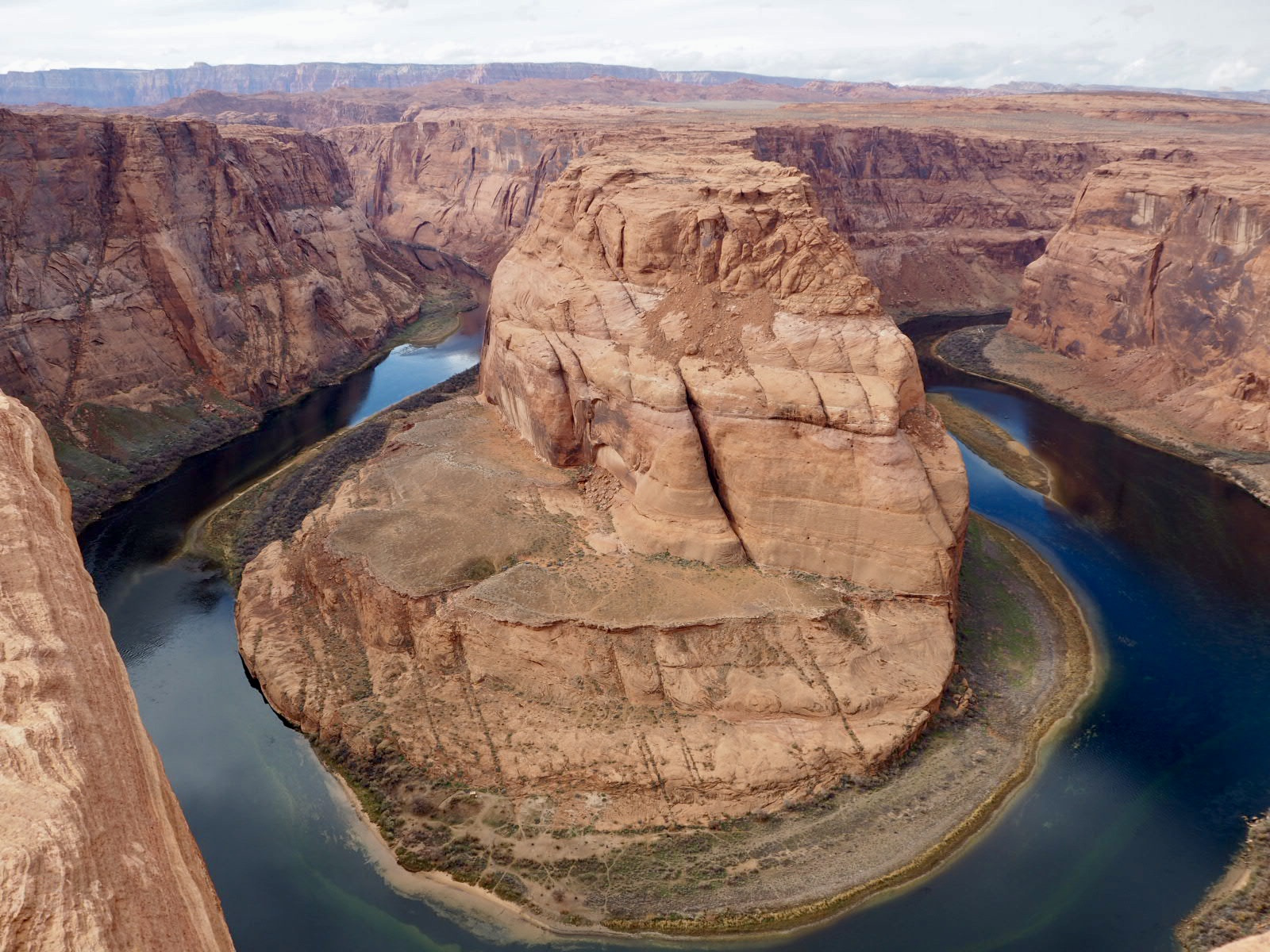
From Las Vegas, we drove for about four hours to reach our first destination: Horseshoe Bend in Arizona. It was Poy’s second visit, but my first time seeing it in person. There was a $10 entrance fee per car, which felt reasonable given how iconic the site is. We ate lunch in the car, then walked over to the overlook. Although there were quite a few visitors, the area was spacious enough that it was still easy to take photos and enjoy the view without feeling too crowded. The dramatic curve of the Colorado River, carved deep into red sandstone, was just as striking as we had imagined.
After Horseshoe Bend, we continued driving for another two hours to Monument Valley. We stayed at a truly special place: The View Hotel, which is owned and operated by Navajo Nation members. If booked well in advance, rooms are around $220 per night, and the price includes discounts at the gift shop, complimentary bottled water, a decent breakfast, and—most importantly—an unforgettable view from the room’s private balcony.
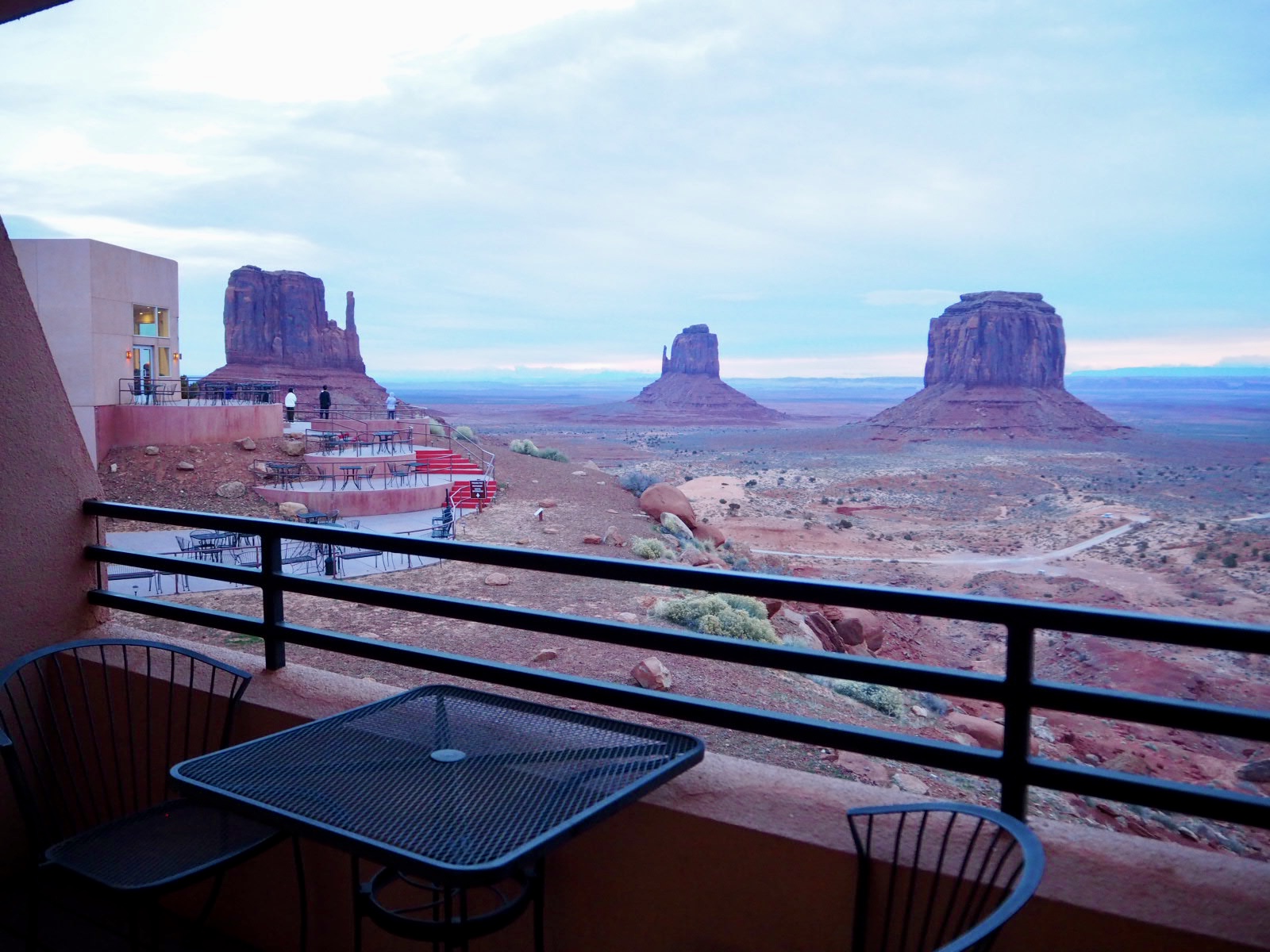
To our surprise, the hotel was full of Asian travelers, which really showed how internationally famous Monument Valley is. We had dinner on our balcony, watching the sunlight slowly fade from the three visible buttes as the desert shifted from warm tones to deep shadows. Later that night, we went out to stargaze, though the moon was quite bright and softened the view of the stars.
Day 3: December 27, 2025
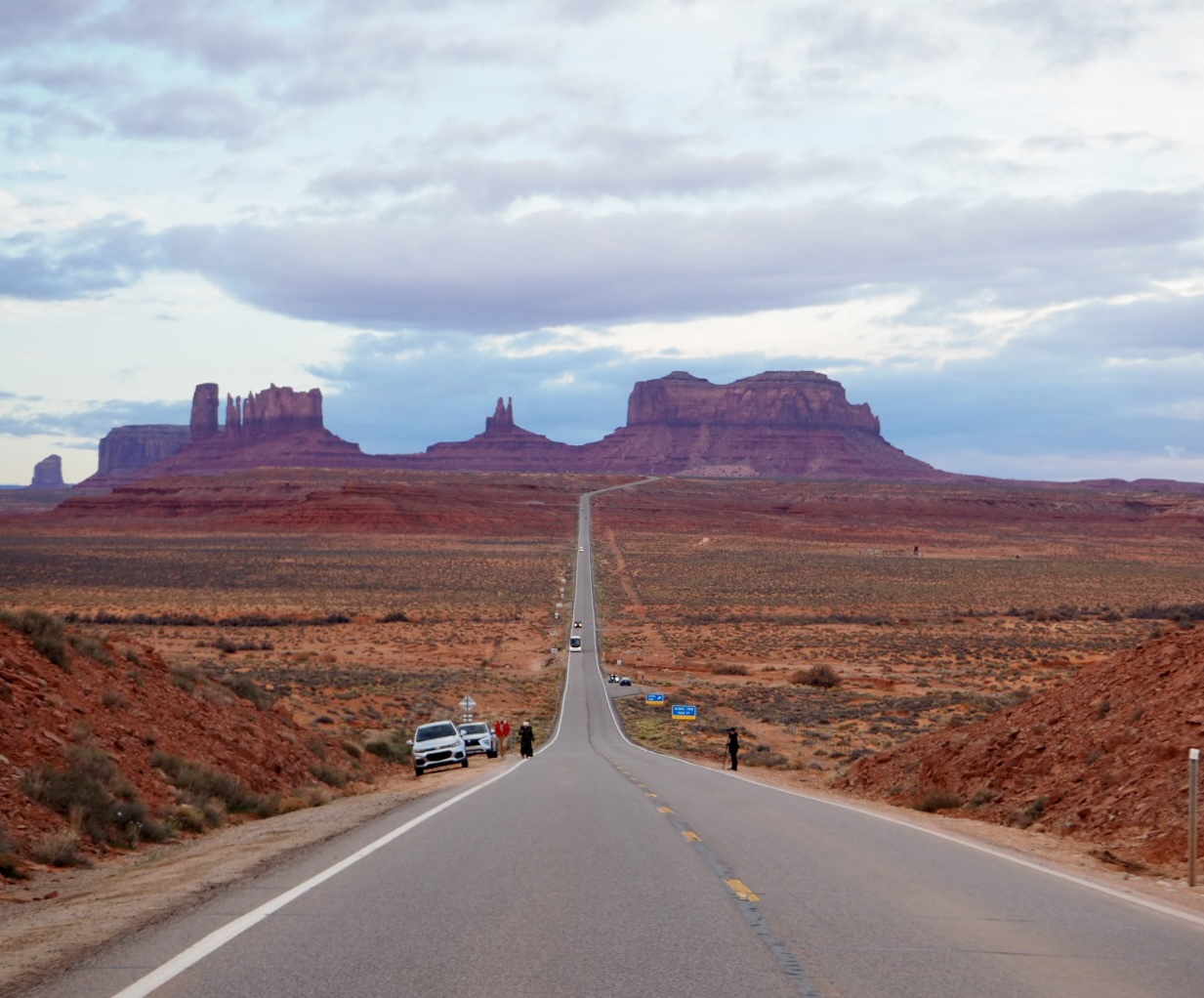
We started the morning with breakfast at the hotel restaurant, accompanied by a stunning view of Monument Valley bathed in early light. Fully recharged, we checked out and drove about 20 minutes to Forrest Gump Point. The drive itself was beautiful, but we didn’t quite recognize the famous scene at first—not until we reached the spot and turned around. Once we saw it, everything clicked. Naturally, we couldn’t resist reenacting the iconic running scene, even though it felt a bit embarrassing.
From there, we headed toward Petrified Forest National Park. Before entering the park, we made a quick stop at Hubbell Trading Post, a historic site where the Hubbell family once played a key role in supporting trade and community development among Native American tribes in the region. We picked up a cute embroidered cap as a souvenir before continuing on.
We arrived at Petrified Forest National Park around noon, marking our first national park of the trip. We entered from the Painted Desert side and began following the route suggested on the park map, ready to explore the ancient landscapes and fossilized trees that make this park so unique.
Before reaching the areas where the petrified logs are most concentrated, we stopped at several sites marked on the park map. Our first stop was Puerco Pueblo, where the remains of Ancestral Puebloan homes and nearby petroglyphs offer a glimpse into the lives of people who lived in the area centuries ago. We also visited Newspaper Rock, a fascinating rock face covered with layered carvings created over more than 2,000 years, making it feel like an ancient public message board.
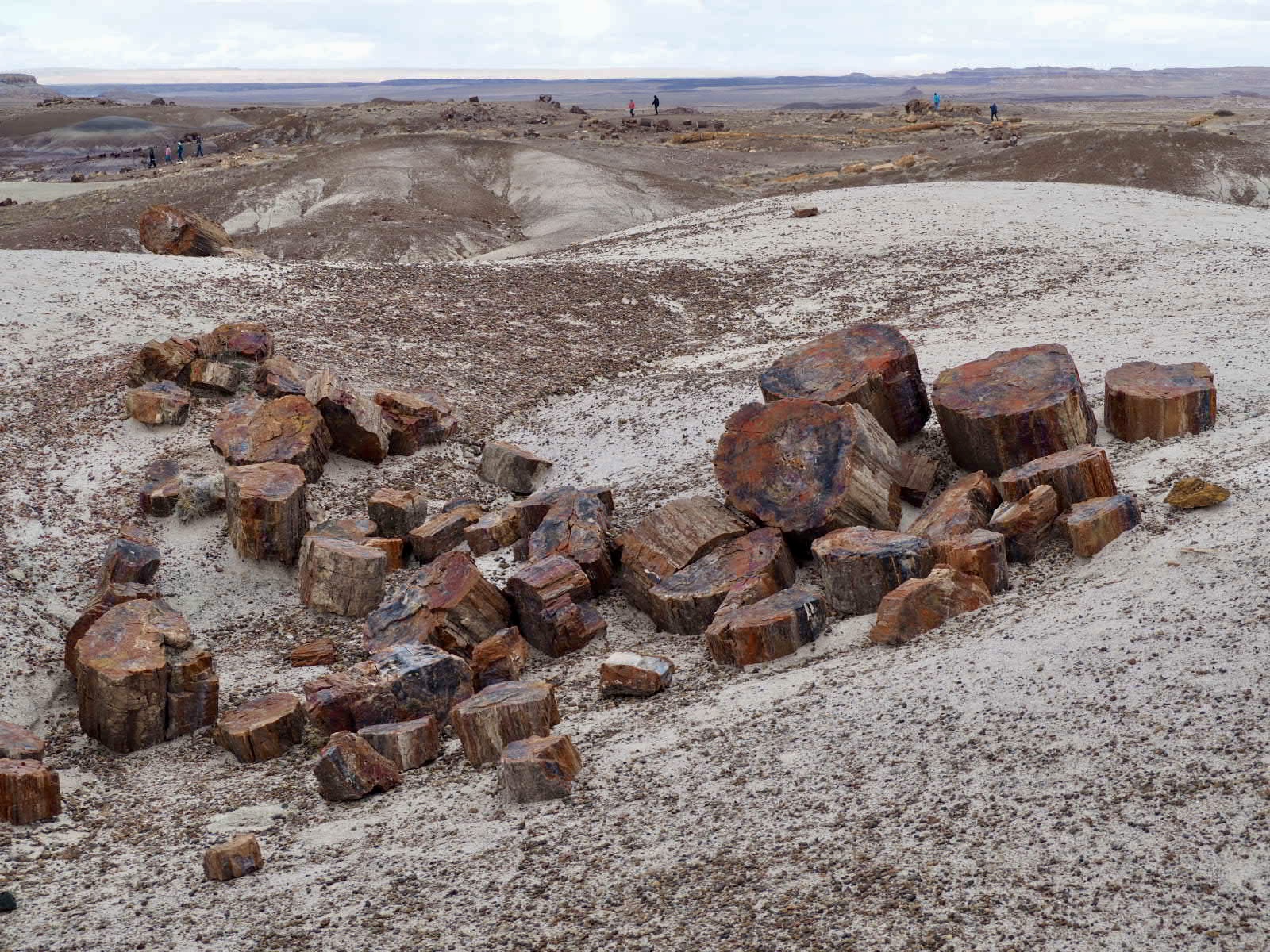
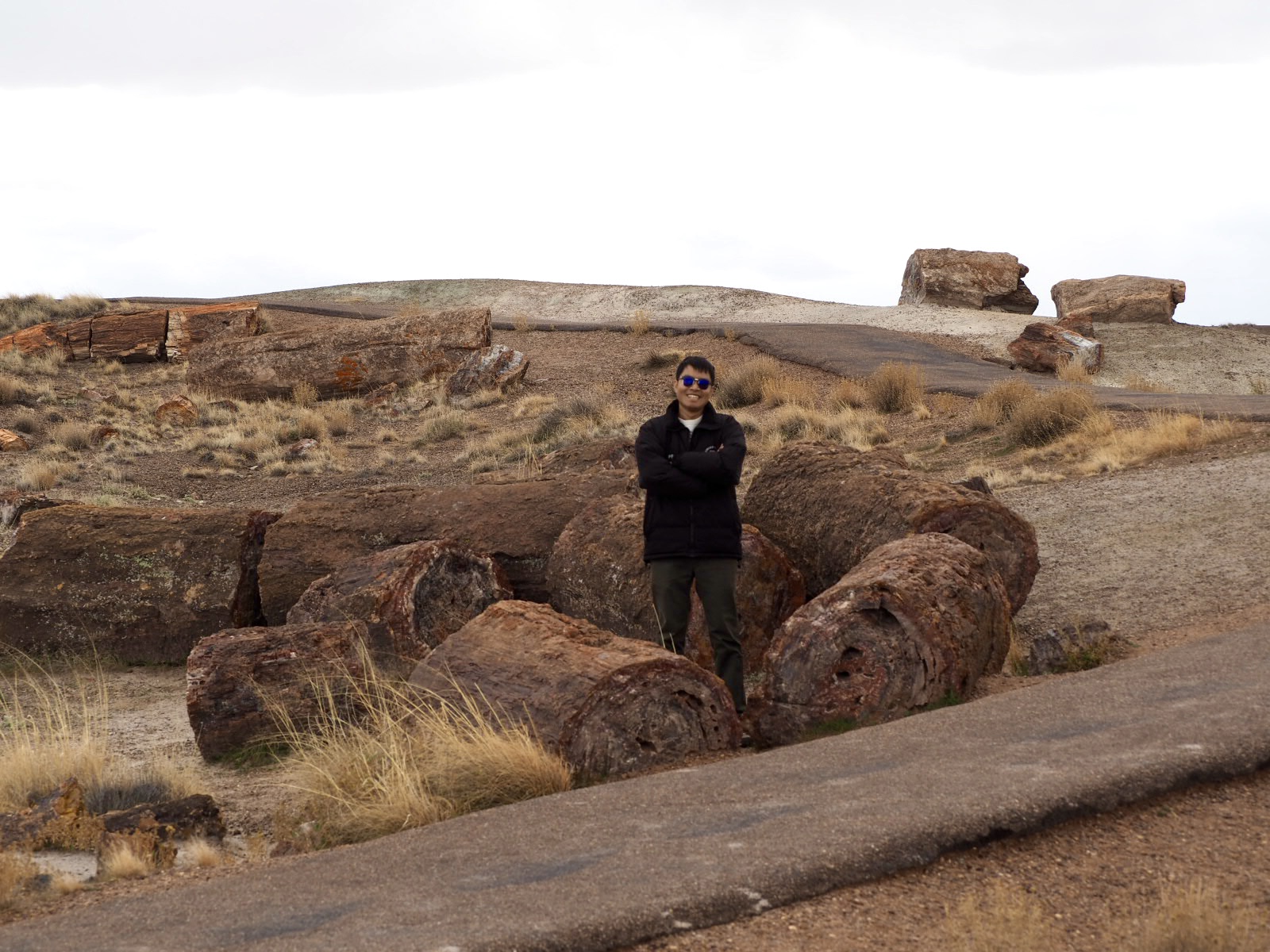
The petrified wood itself is most densely found in the Jasper Forest and Crystal Forest. Walking through these areas felt almost unreal—the fallen logs, once ancient trees, have slowly turned into stone while preserving their original structure. We spent a long time strolling along the trails, admiring the gem-like colors and textures, and gently touching the petrified wood (carefully and respectfully) made the experience even more memorable.
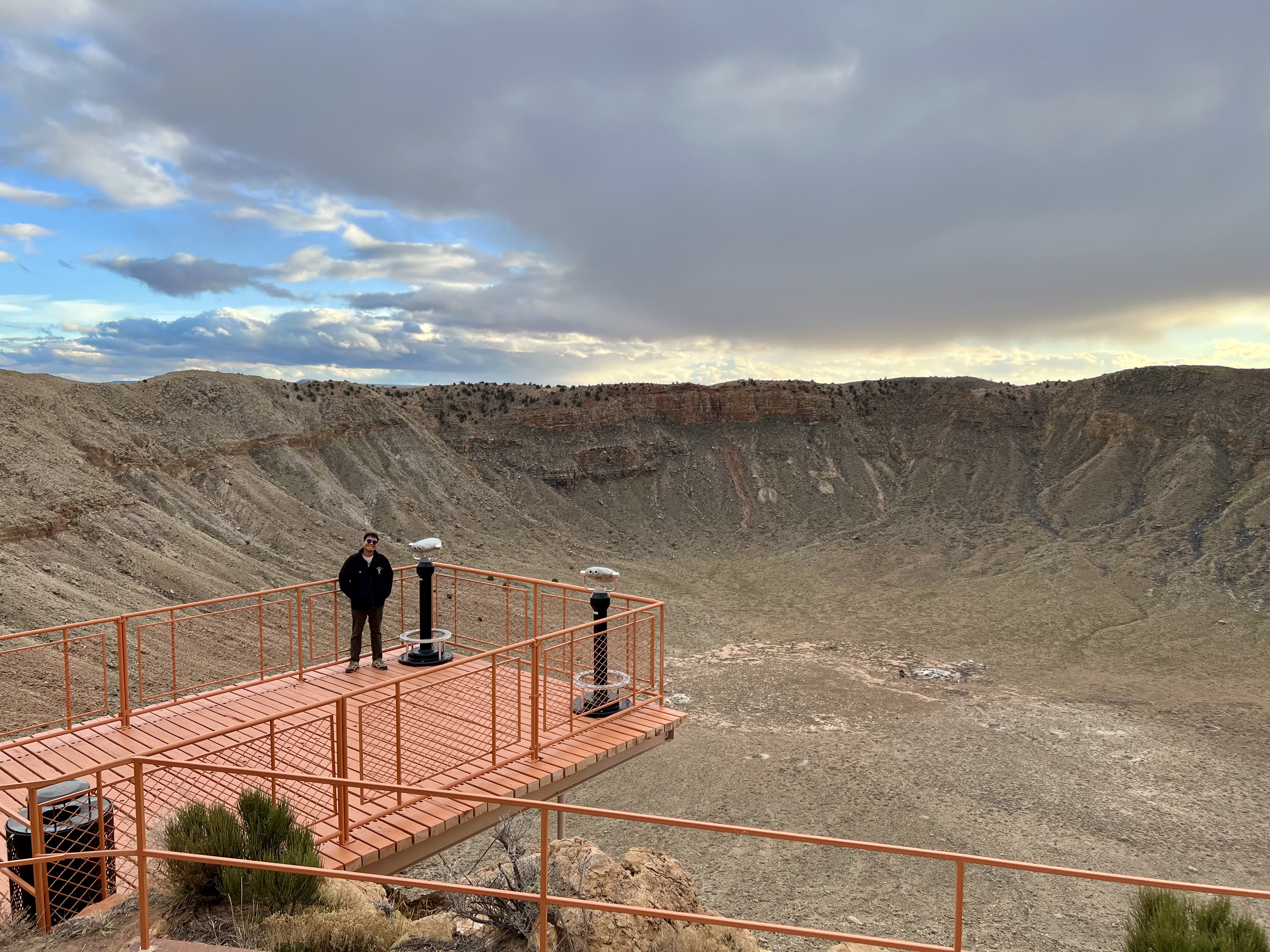
With some time left before sunset around 5:30 p.m., we made a quick stop at the Meteor Crater National Landmark. Home to one of the best-preserved meteor impact craters in the world, the site was impressive even at first glance. Although the entrance fee was around $30, standing at the rim and taking in the sheer scale of the crater felt well worth it. The short introductory film and the fun 4D experience—especially popular with kids—were nice bonuses.
We ended the day by driving to Sedona, a beautiful town surrounded by red rock formations and rugged mountains. The drive took about an hour and a half due to the winding roads, but the scenery made it enjoyable. We stayed at the Dreamcatcher Inn, a comfortable and affordable place to rest after a full day of exploring.
Day 4: December 28, 2025
On the morning of Day 4, we woke up very early to catch the sunrise at Airport Mesa, one of the most popular sunrise viewpoints in Sedona. It was a freezing cold morning—probably the coldest moment of the entire trip—but watching the sky slowly light up over the red rocks made it completely worth it.
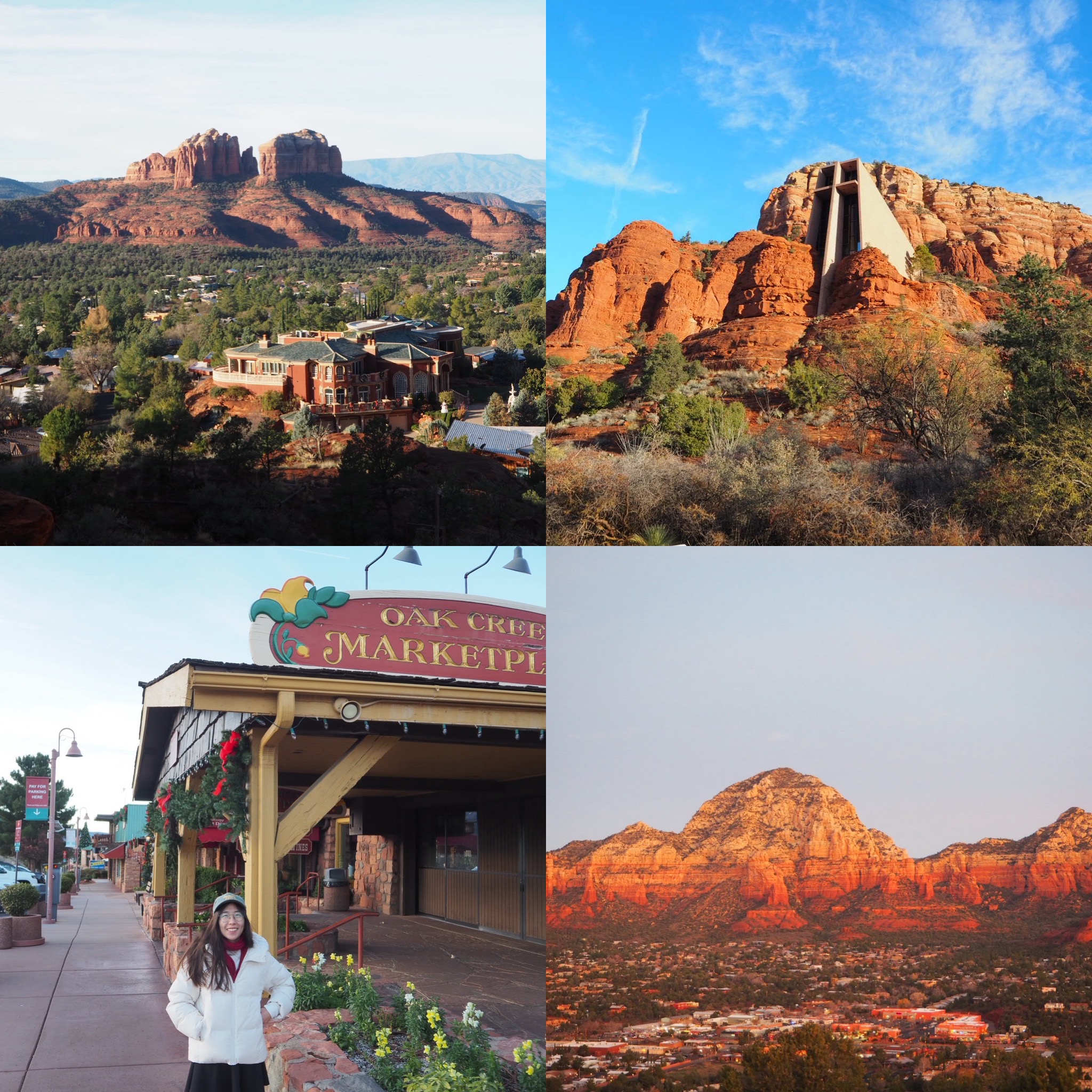
After sunrise, we headed to Uptown Sedona to grab coffee and tea. We walked around for a bit, only to realize that most of the shops were still closed that early in the morning. Instead, we decided to visit the Chapel of the Holy Cross, a striking chapel built directly into the red rocks—a place we had previously only seen on GeoGuessr. The chapel itself was calm and peaceful, but the scene outside was chaotic. The road leading up to it was narrow and crowded, with cars constantly coming in. We were lucky to arrive early, around 8:30 a.m., before the crowds became overwhelming.
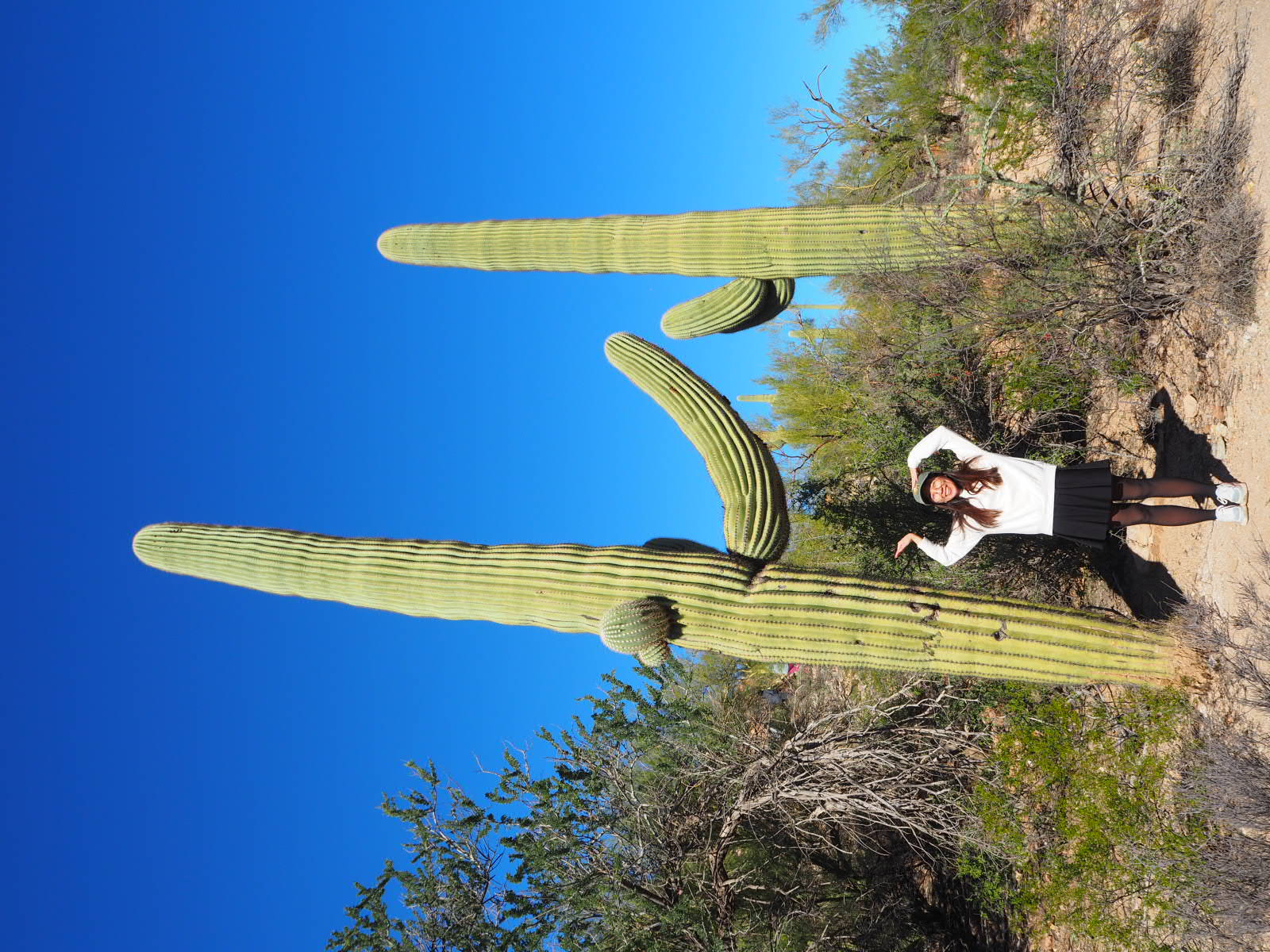
After saying goodbye to Sedona, we continued on to the second national park of the trip: Saguaro National Park. After about three and a half hours of driving, we arrived and began exploring via the Bajada Loop Drive. Part of the route was unpaved, but it brought us incredibly close to the towering saguaro cacti—the iconic giants we’ve been drawing since childhood. Seeing them up close in real life was both surreal and delightful.
We stopped for a picnic lunch at Signal Hill, where we could see even more saguaros along with ancient petroglyphs etched into the rocks. We wrapped up our visit at the Red Hills Visitor Center, picking up (yet again) souvenir magnets and some fun cactus candy.
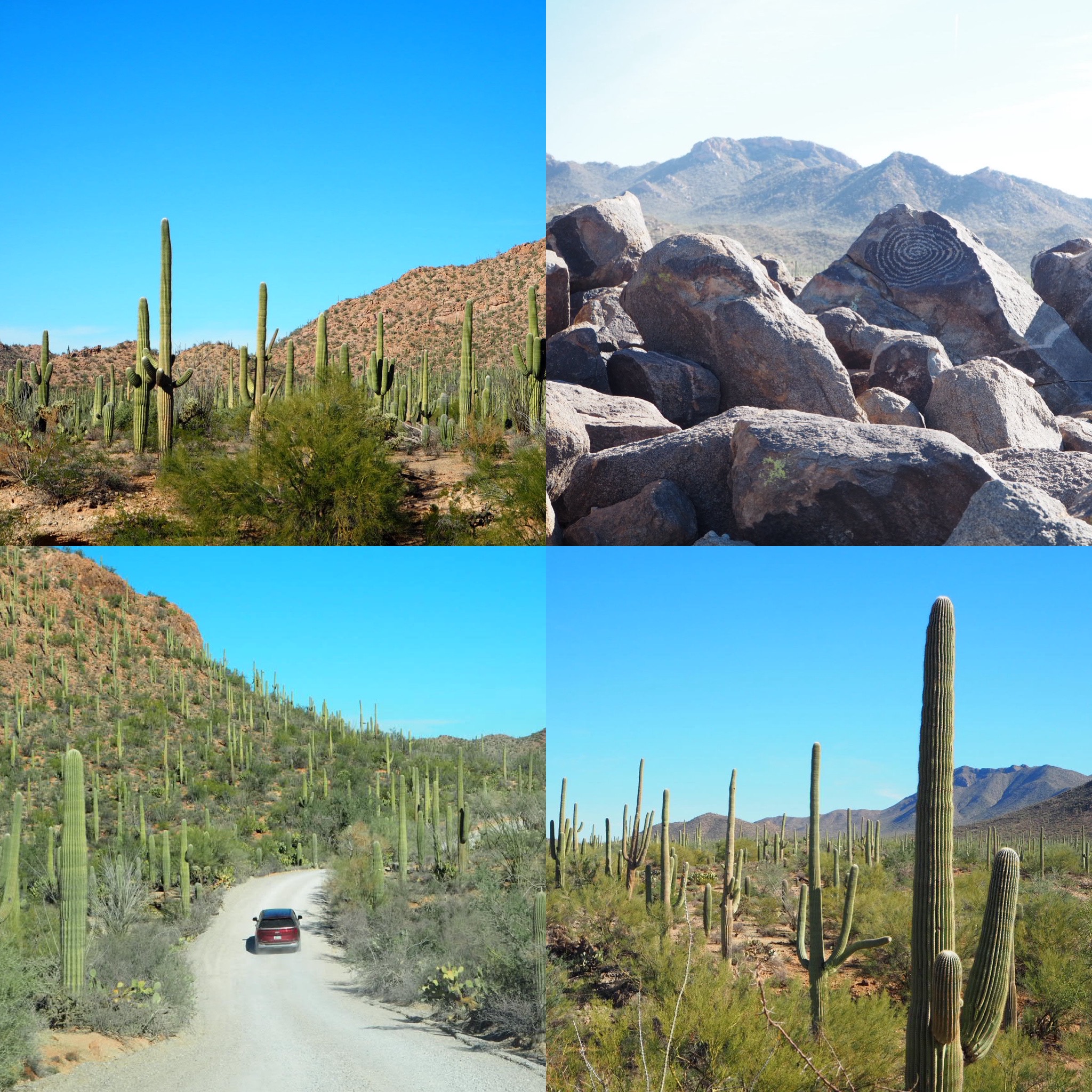
Our day wasn’t over yet. Just 10 minutes from the park entrance, we visited the Arizona-Sonora Desert Museum. Although the entrance fee was around $30, the museum was well worth it. It’s best described as a mix of an outdoor natural history museum and a zoo, showcasing desert plants and animals in beautifully designed open-air exhibits. We spent about two hours there, though it would be easy to spend twice that time. We skipped the longer desert walking trail but explored nearly everything else, including two stunning aviaries.
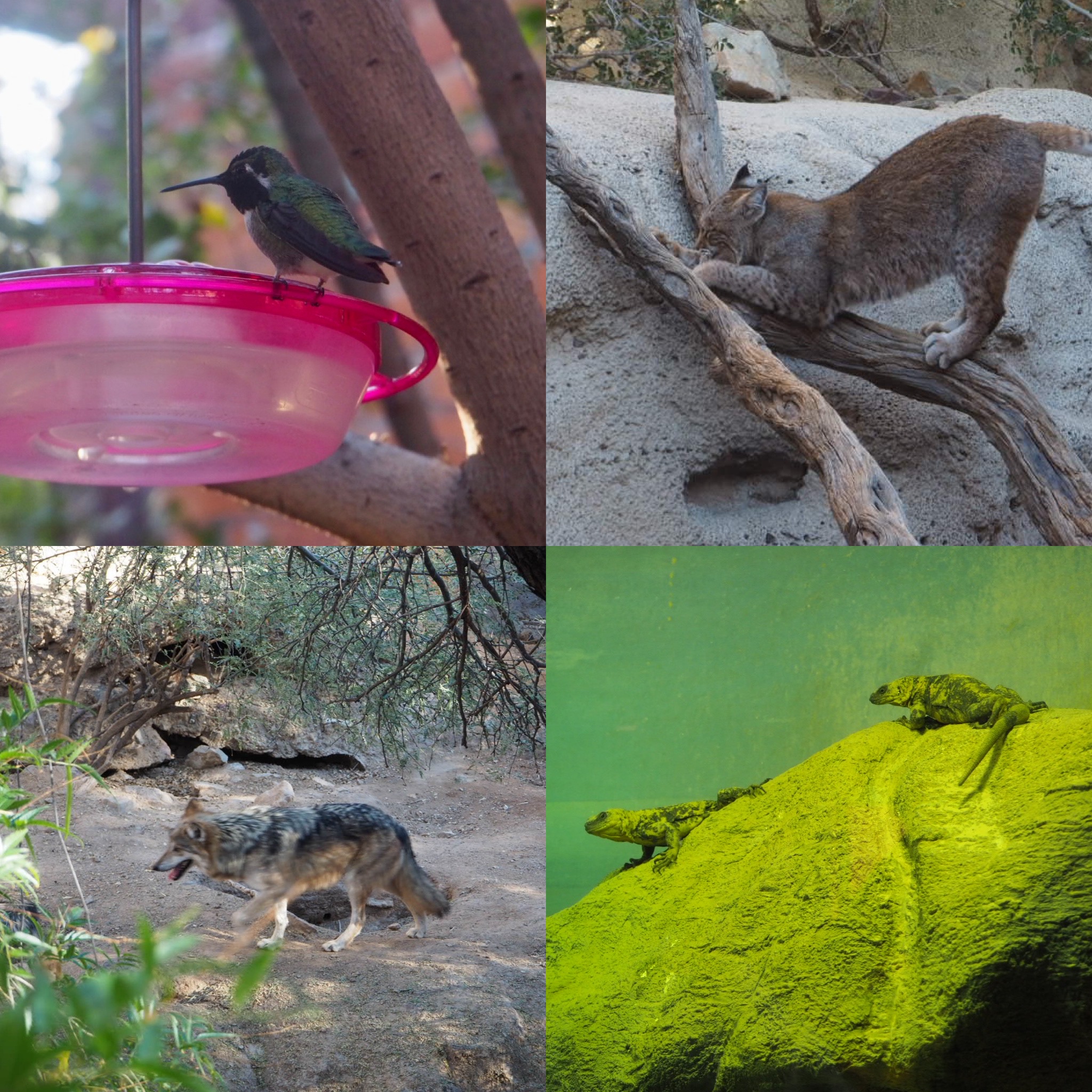
In the evening, we drove back to Phoenix and stayed at WoodSpring Suites. Since we had been relying mostly on packed lunches and microwave meals, we decided to treat ourselves to dinner at Number One Buffet, which offered a wide variety of seafood and Asian dishes for under $25 per person. It was tasty, filling, and exactly what we needed before heading back to the hotel and crashing for the night.
Day 5: December 29, 2025
On the last day of our trip, we spent most of our time on the road—about seven hours of driving in total. About halfway through the journey, we stopped at the third and final national park of the trip: Joshua Tree National Park. Poy had visited Joshua Tree before, but it was my first time there. To our surprise, the park was much more crowded than Poy remembered and more crowded than we had expected overall. With so many people traveling from California, though, it was understandable.
We entered the park through the Cottonwood Visitor Center. By the time we arrived, it was already around noon, so we stopped at a nearby picnic area for lunch. After that, we drove to Cottonwood Spring, a small oasis within the park. We took a short walk to see the tall palm trees, though the water itself was nowhere to be found during this dry season.
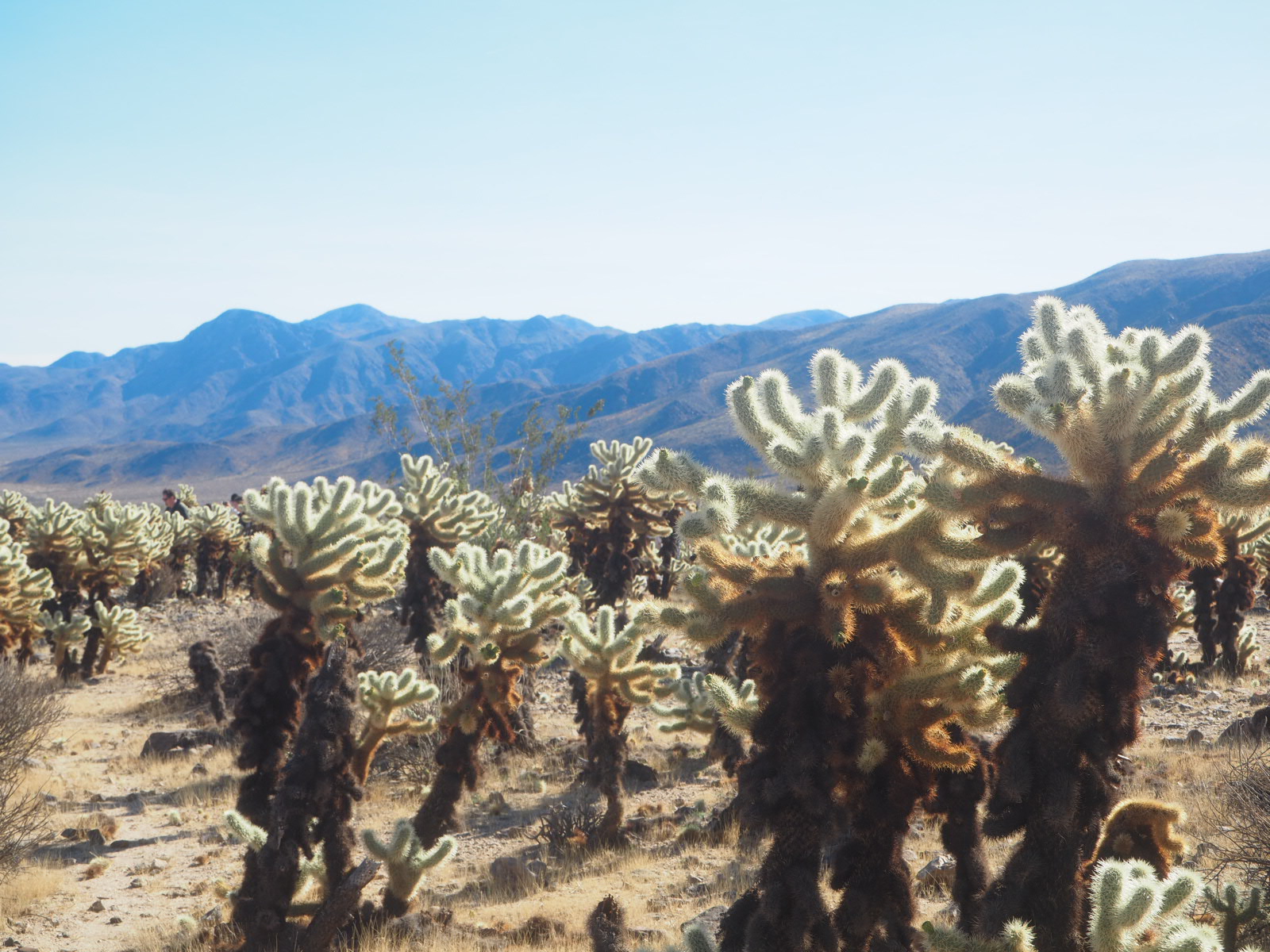
Next, we visited the Cholla Cactus Garden, where thousands of fluffy-looking cholla cacti fill the landscape. Despite their soft appearance, these cacti are famously sharp—definitely a look-but-don’t-touch situation. Walking through the garden felt both fascinating and slightly intimidating.
We then made our way to Skull Rock, where we spotted a few Joshua trees along the way. Most of them were still quite young, so they didn’t yet resemble the dramatic silhouettes often seen in photos. The main attraction here was the large rock formation itself, with several holes eroded into it, giving it the unmistakable appearance of a skull.
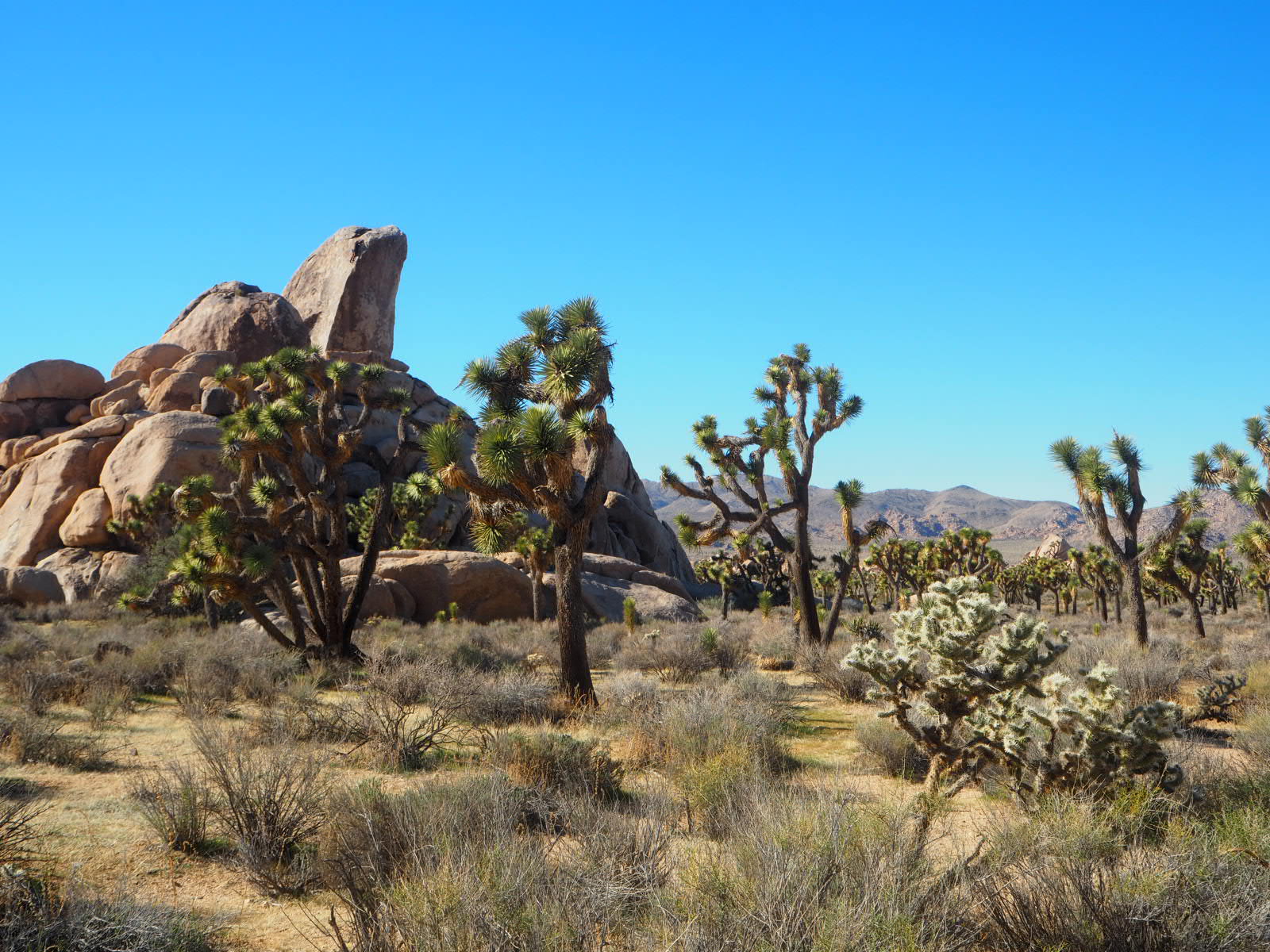
We also attempted to stop at Hidden Valley, which is often described online as having one of the highest concentrations of Joshua trees in the park. However, the parking lot was completely full, and we didn’t have the patience to wait it out. Instead, we opted for the Ryan Ranch Trail, a quieter and more relaxed alternative. We enjoyed a peaceful walk along the trail, taking in the wide-open desert and the scattered Joshua trees along the way. We exited the park through the entrance by the Joshua Tree National Park Visitor Center, pausing one last time to rest and pick up a few souvenirs before officially leaving the desert behind.
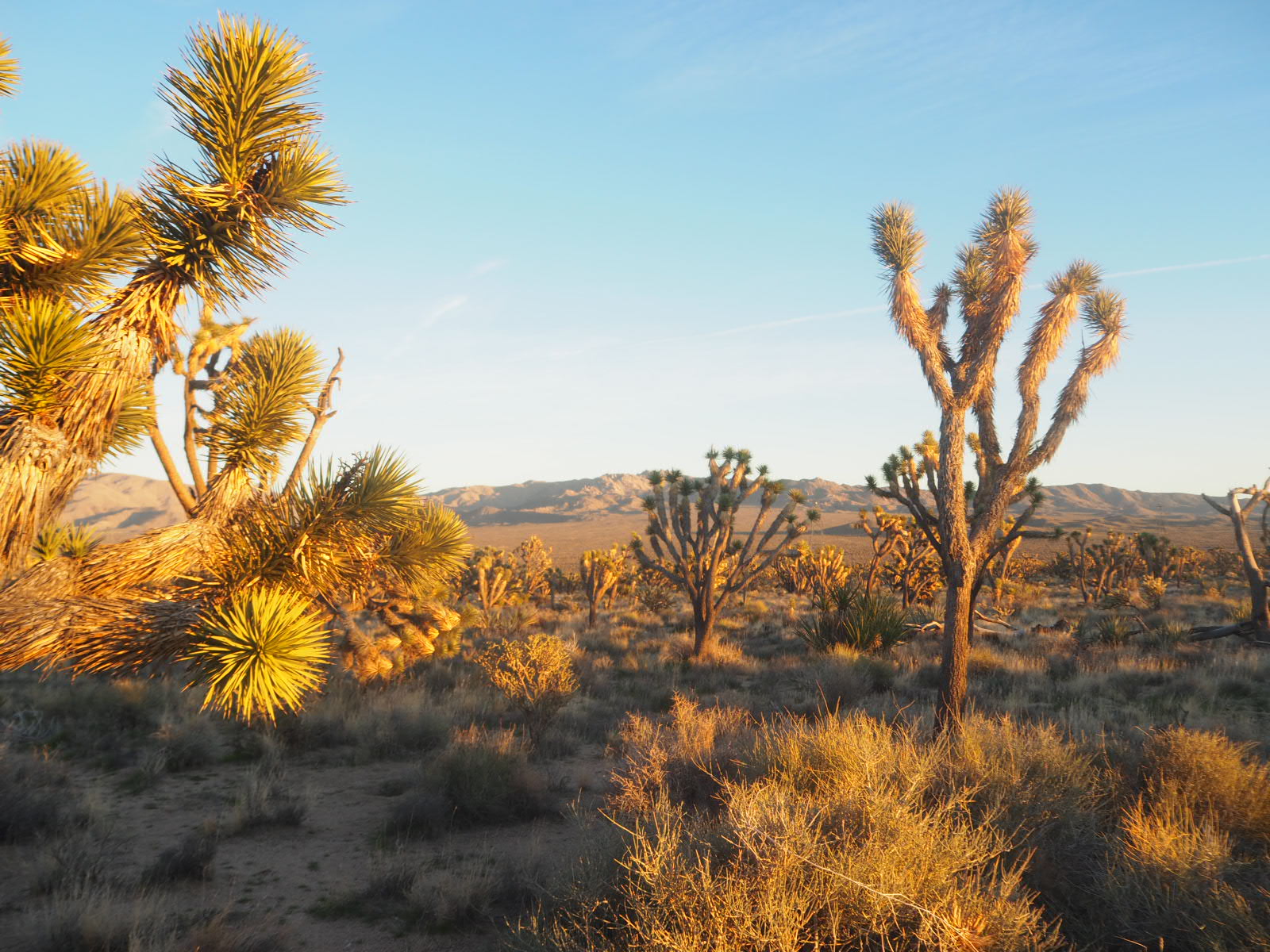
The rest of our journey took us back toward Las Vegas. Along the drive through the Mojave Desert Preserve, we spotted even more Joshua trees stretching across the landscape. As the sun began to set, the desert was washed in warm colors, and we couldn’t resist pulling over for a quick stop to capture the moment.
We ended our Christmas desert adventure with a red-eye flight back to Chicago, bringing a long, dusty, and unforgettable trip to a close.
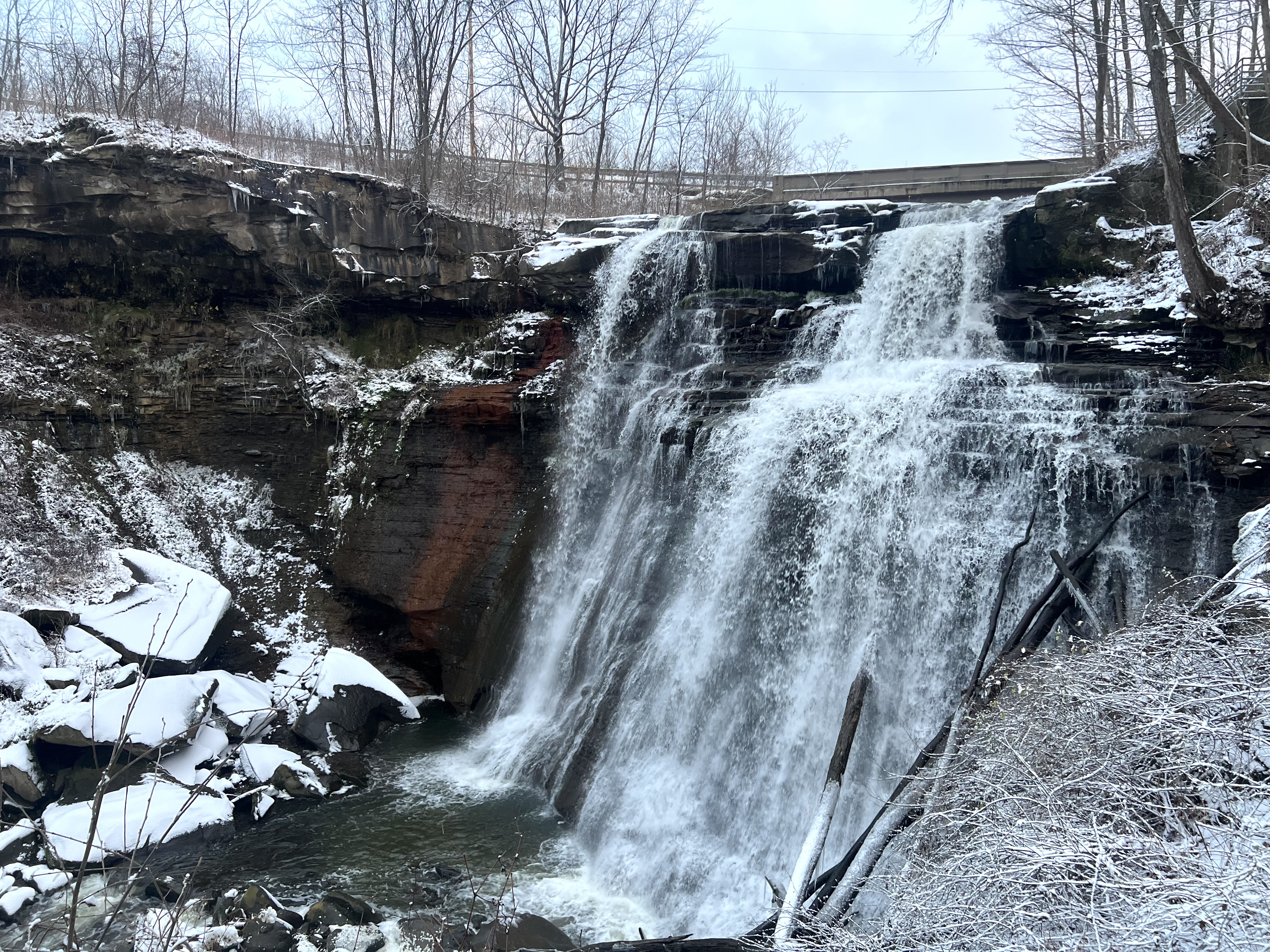 Despite the polar vortex that swept through Illinois, we decided to visit Cuyahoga Valley National Park in Ohio, driving from our home in Champaign. Along the way, we got to meet some friends in Cincinnati and Akron. In fact, we didn’t stop only at Cuyahoga Valley; we also continued on to see a much bigger set of falls in upstate New York—Niagara Falls. Everything was freezing cold, but the fresh snow somehow gave the entire trip a magical atmosphere.
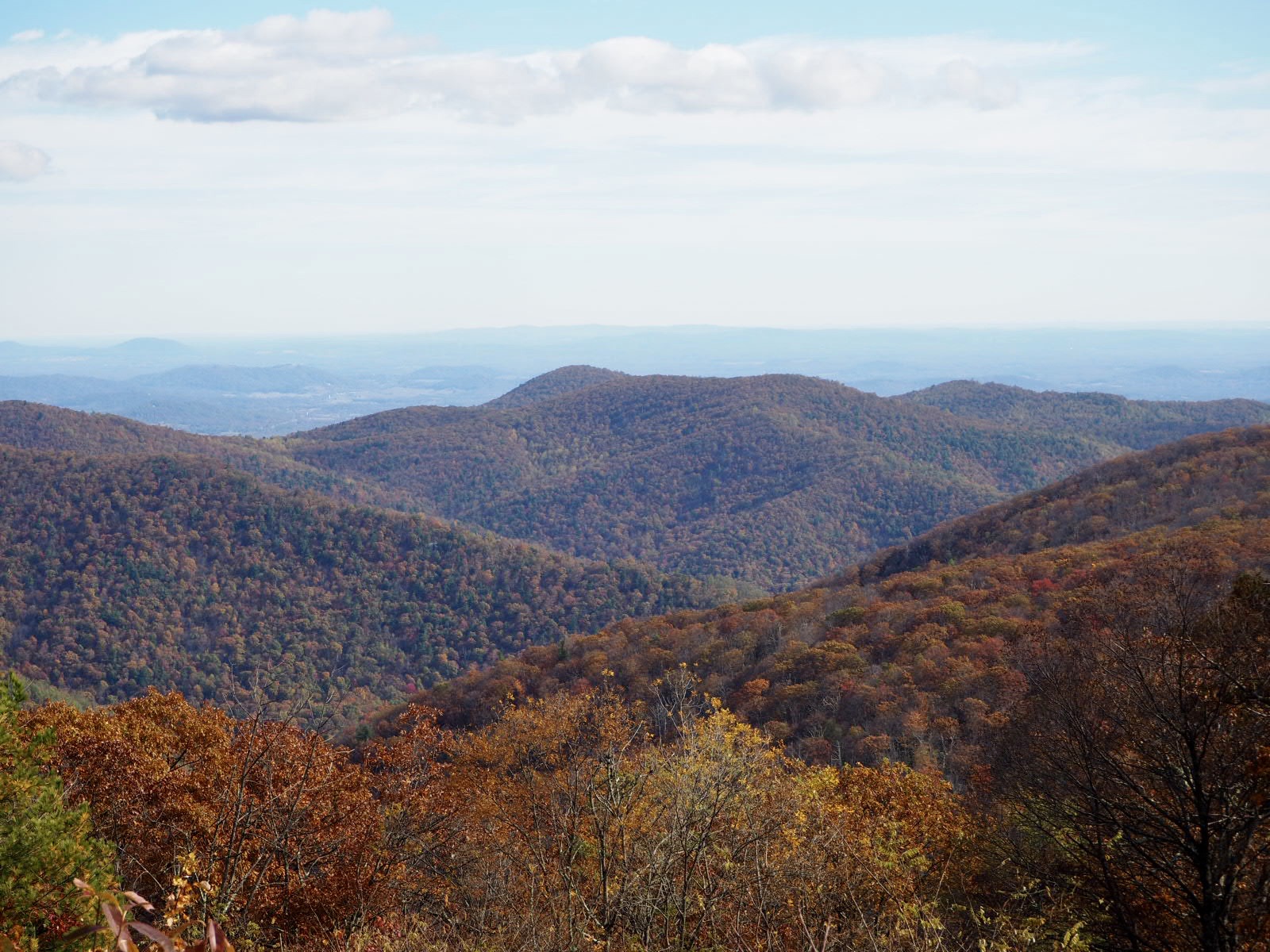 Foliage season feels so fleeting to me, so Poy and I never really planned to chase fall colors anywhere beyond our university campus. But there are a few national parks that are especially beautiful in autumn, and we wanted to try visiting them at their peak. We followed the fall–color predictions closely and booked our flights well in advance to keep costs down. On this trip, we were lucky enough to catch vibrant red and yellow leaves in Shenandoah, New River Gorge, and Great Smoky Mountains National Parks. We also had the chance to explore the beautiful wetlands of Congaree National Park before flying back home!
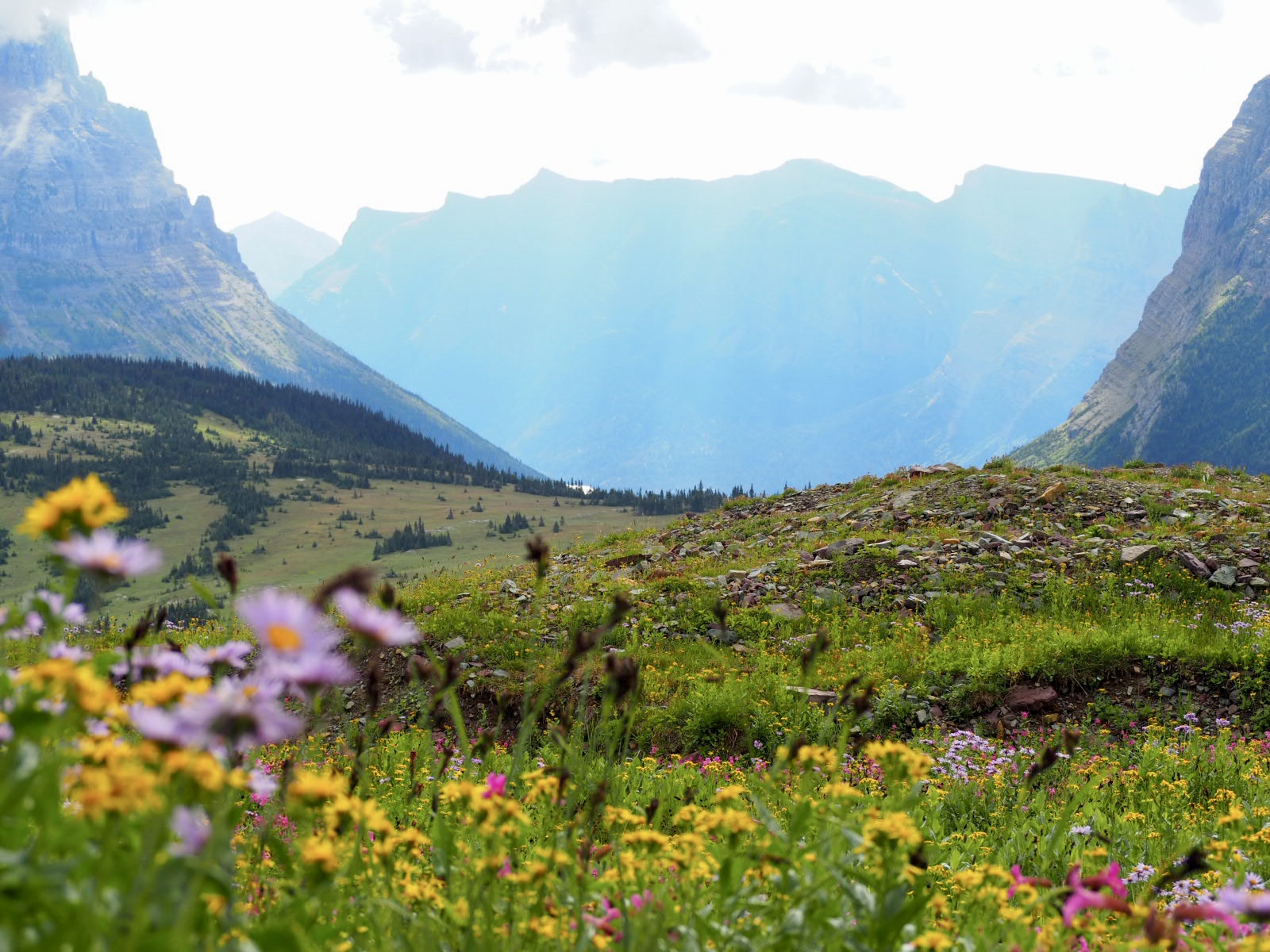 At the end of Summer 2025, we embarked on a grand tour of the northern United States. Our goal was to explore a mix of popular national parks and hidden gems across Montana, Wyoming, Oregon, and Washington. The journey took us through breathtaking mountain ranges and bountiful wilderness teeming with wildlife. Thanks to booking our flights more than six months in advance, we were lucky enough to fly directly out of Champaign, a perfect start to our adventure!
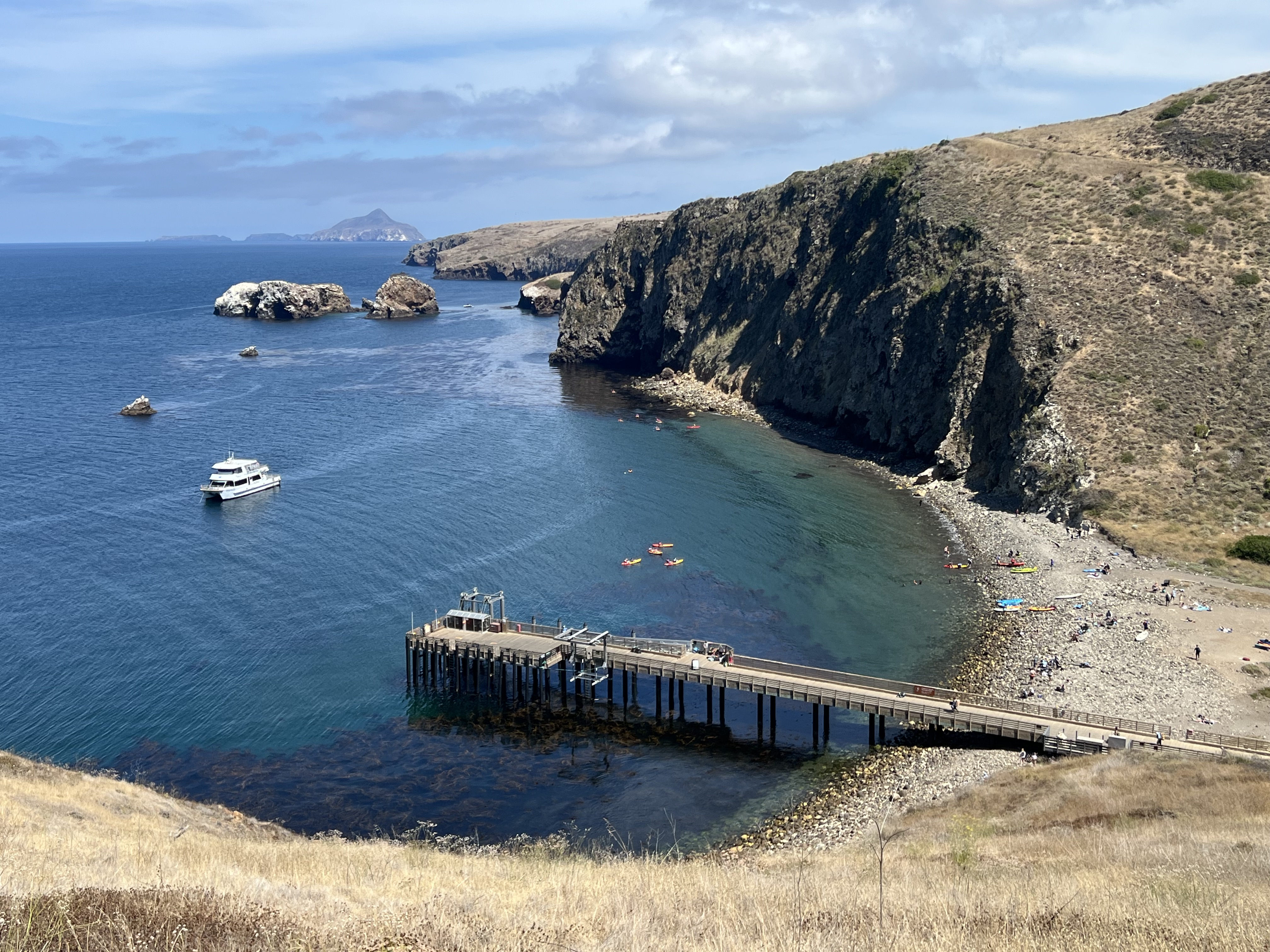 This past July, we embarked on a whirlwind three-day trip to visit some of California’s national parks that were still on our list, namely, Channel Islands, Pinnacles, and Kings Canyon. While they may be less famous than their neighbors, we found them to be refreshing, full of fun, and wonderfully family-friendly. The trip was a showcase of California’s diverse wildlife, giving us our first-ever sightings of whales, island foxes, scrub jays, and California quails, and that’s not even counting the school of dolphins that raced our ferry to and from the Channel Islands!